A Europe pilgrimage tour can bring together important religious destinations, historic churches, shrines, monasteries and places associated with saints and significant events in Christian history. Popular destinations include Rome and the Vatican in Italy, Assisi, Lourdes in France, Fátima in Portugal and Santiago de Compostela in Spain.
The best itinerary depends on the purpose of the pilgrimage, the number of days available, the group’s mobility and the places participants want to visit. Some travellers prefer a focused visit to one shrine, while others plan a multi-country programme combining several religious destinations.
For travel agents, tour operators, churches and group organisers, planning also involves accommodation locations, airport arrivals, ground transportation, religious services and enough time at each sacred site. This guide explains the destinations to consider and the practical details involved in organising a European pilgrimage.
What Is a Europe Pilgrimage Tour?
A Europe pilgrimage tour is a planned journey to religiously significant places across one or more European countries. Depending on the faith tradition and the purpose of the trip, it may include visits to shrines, basilicas, cathedrals, monasteries, places associated with religious figures and established pilgrimage routes.
Christian pilgrimage itineraries commonly include:
- Prayer and worship at religious shrines.
- Visits to basilicas, cathedrals and monasteries.
- Places associated with saints and important religious events.
- Participation in scheduled Masses, processions or other religious services.
- Walking sections of established pilgrimage routes.
- Time for reflection, prayer and group activities.
A pilgrimage does not have to cover several countries. A carefully planned stay in Rome, Lourdes or Fátima can be more suitable than a rushed itinerary covering too many destinations.
Best European Destinations to Include in a Pilgrimage
Europe has a wide range of religious and historical sites. The following destinations are particularly relevant to Christian pilgrimage planning.
1. Rome and Vatican City, Italy
Rome is an important destination for Catholic pilgrims because of its connection with the history of the Church and the Vatican. Visitors may include St. Peter’s Basilica, other major basilicas and religious sites in their itinerary. The Vatican Museums and Sistine Chapel may also be included where appropriate.
Allow enough time for security procedures, walking between sites and any religious events the group hopes to attend. St. Peter’s Basilica provides official visitor information and guidance on access. St. Peter’s Basilica
2. Assisi, Italy
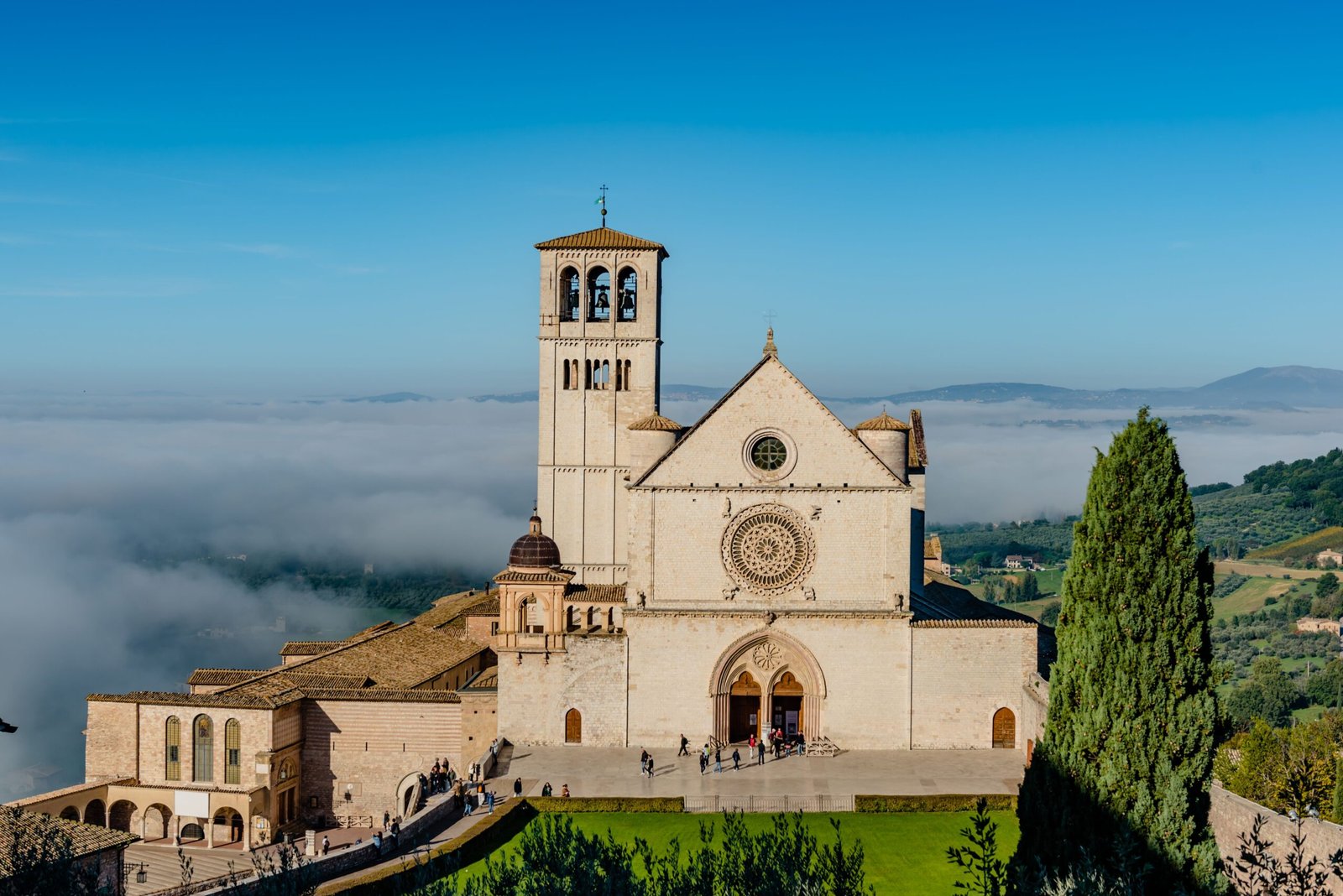
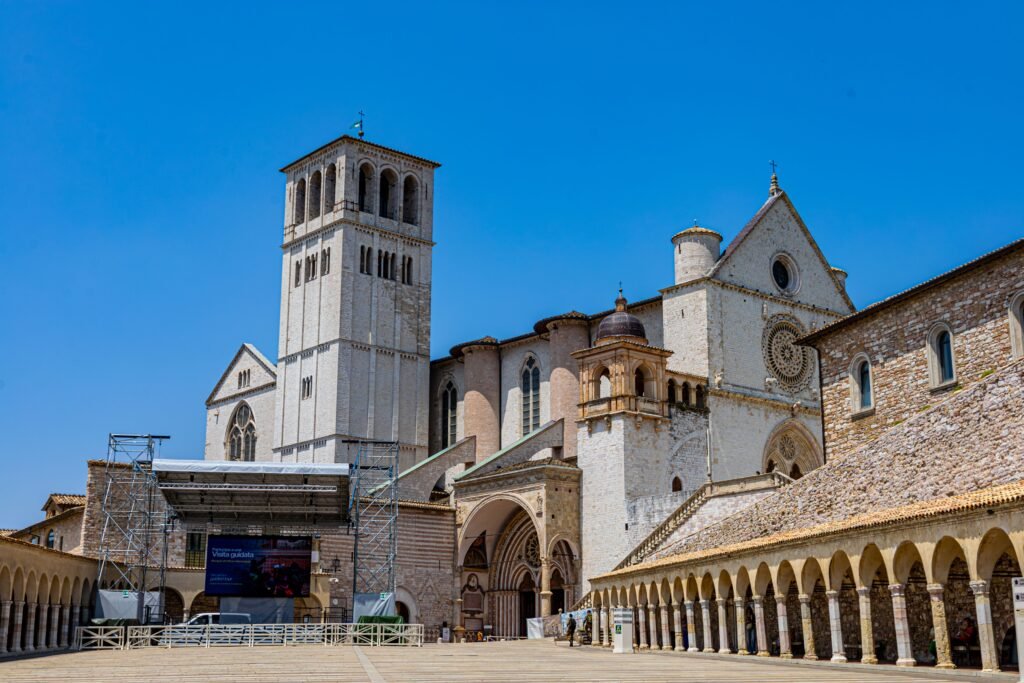
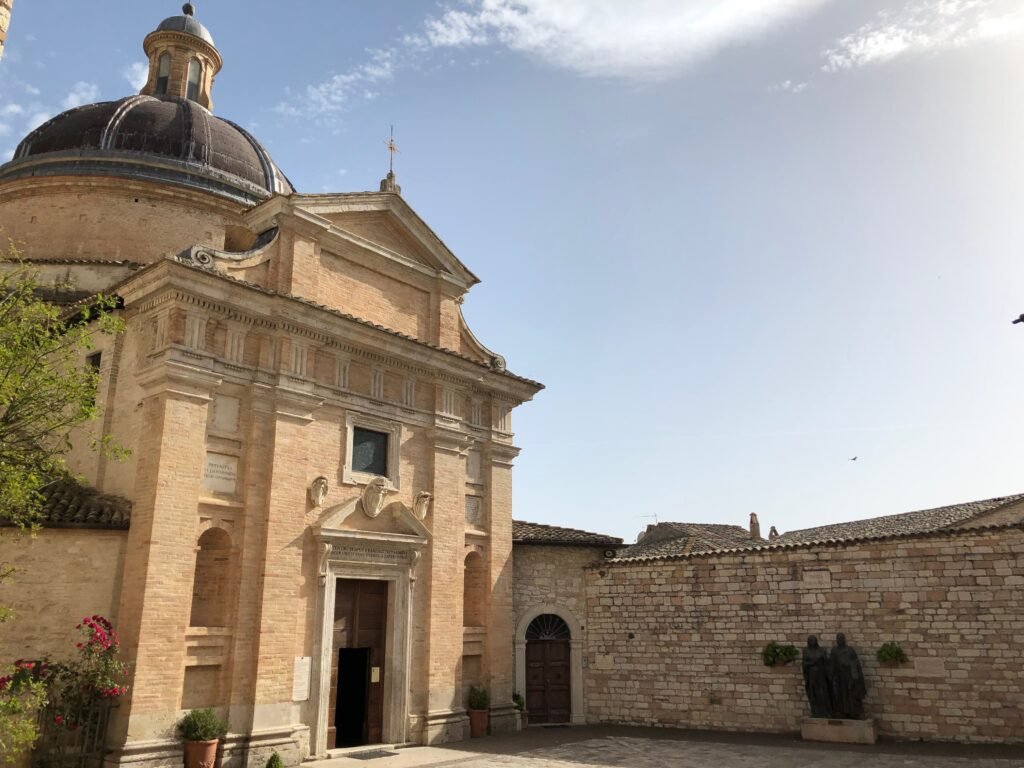
Assisi is closely associated with St. Francis and St. Clare. Pilgrims often visit the Basilica of St. Francis, the Basilica of St. Clare and other places connected with their lives.
The town’s historic setting includes slopes and pedestrian areas. Organisers should consider walking distances, access arrangements and the location of the group’s accommodation when planning the visit.
3. Lourdes, France
Lourdes is a major Marian pilgrimage destination, associated with the apparitions of the Virgin Mary to Bernadette Soubirous. The Sanctuary of Our Lady of Lourdes includes the Grotto and other places used for prayer and religious celebrations.
Pilgrimage organisers should check the official sanctuary programme for the dates of their visit. The sanctuary’s official app also provides maps, celebration schedules and information about accessibility around the site. Vivre le pèlerinage de Lourdes+1
4. Fátima, Portugal
Fátima is known for its Marian pilgrimage tradition and the Sanctuary of Our Lady of Fátima. The site is associated with the reported apparitions of 1917 and is an important destination for pilgrims seeking time for prayer and participation in religious celebrations.
Groups may plan time at the sanctuary and, depending on their itinerary, visit nearby places associated with the Fátima story. Check the sanctuary’s official information before confirming the programme.
5. Santiago de Compostela, Spain
Santiago de Compostela is the destination of the Camino de Santiago pilgrimage routes. The city’s cathedral is associated with the tomb of St. James the Apostle.
Travellers can visit the cathedral without walking the entire Camino. Those completing a qualifying pilgrimage route should understand the credential and certificate requirements before departure. The cathedral’s official website provides information about the Pilgrim’s Office and the Compostela. Catedral de Santiago+1
Where Are These Pilgrimage Destinations?
These destinations are spread across southern and western Europe. Their locations can help organisers decide whether to create an Italy-focused itinerary, a France and Spain programme, or a longer multi-country pilgrimage.
Use two fingers to move the map
Use ctrl + scroll to zoom the map
Rome and Vatican City4.8•BasilicaOpen
Assisi4.8•BasilicaOpen
Lourdes4.7•Pilgrimage placeOpen
Fátima4.8•BasilicaOpen
Santiago de Compostela4.3•ChurchClosed
How to Plan a Multi-Country European Pilgrimage Itinerary
The number of destinations should be determined by the available travel days and the time participants want to spend at each religious site. The following are possible route combinations, not fixed Tour Passion packages or guaranteed day-by-day schedules.
Option 1: Italy Pilgrimage – Rome and Assisi
An Italy-focused pilgrimage can combine Rome and Assisi.
Possible programme:
- Begin in Rome with visits to major basilicas and Vatican City.
- Include time for religious services or events, subject to their schedules.
- Continue to Assisi to visit sites associated with St. Francis and St. Clare.
- Allow time for the historic town and its religious landmarks.
This route is suitable for groups whose main interest is Catholic Church history and Franciscan heritage. The number of nights in each destination should reflect the group’s pace and priorities.
Option 2: France Pilgrimage – Lourdes
A pilgrimage focused on Lourdes can provide more time at one sanctuary rather than spending several days travelling between countries.
Possible programme:
- Arrive in France and transfer to the group’s accommodation.
- Plan visits to the Grotto and other areas of the sanctuary.
- Check the programme of Masses and religious celebrations.
- Include time for prayer, reflection and group activities.
This can be appropriate for parish groups, senior travellers and participants who prefer a less travel-intensive programme.
Option 3: Portugal and Spain – Fátima and Santiago de Compostela
A Portugal and Spain itinerary can combine two significant pilgrimage destinations.
Possible programme:
- Begin in Portugal with a stay in Fátima.
- Visit the Sanctuary of Our Lady of Fátima.
- Continue towards Spain according to the selected route.
- Visit Santiago de Compostela and the cathedral.
The route needs careful planning because the destinations are in different parts of the Iberian Peninsula. Travel time, overnight stops and the group’s preferred pace should be considered before finalising the itinerary.
Option 4: A Longer Europe Pilgrimage – Italy, France, Portugal and Spain
Groups with more available days may consider combining Rome, Assisi, Lourdes, Fátima and Santiago de Compostela.
This type of itinerary requires more detailed coordination. The order of destinations should be based on international flight arrangements, hotel availability, the number of nights required at each stop and the transport plan.
Avoid adding destinations simply to make the itinerary appear more comprehensive. A pilgrimage should leave enough time for religious activities and rest.
How Many Days Do You Need for a Europe Pilgrimage Tour?
There is no single ideal duration. It depends on the number of destinations, the group’s pace and whether the itinerary includes long-distance travel.
| Trip style | Planning approach |
|---|---|
| Single-destination pilgrimage | Focus on one shrine or religious city, with time for services and visits |
| Two-destination pilgrimage | Combine nearby or logically connected destinations |
| Three-country pilgrimage | Allow for intercity travel and overnight stays between countries |
| Extended European pilgrimage | Build a route around several priority sites, with adequate rest and buffer time |
| Camino walking pilgrimage | Plan walking stages, accommodation, daily distances and arrival arrangements separately |
For group organisers, it is useful to distinguish sightseeing days from transfer days. A day involving a long intercity journey should not be treated as a full day available for religious visits.
Transportation Options for Pilgrimage Groups in Europe
Transportation affects the pace, comfort and practical organisation of a pilgrimage. The right option depends on group size, luggage, mobility needs, route and the number of destinations.
Private Coach Transportation
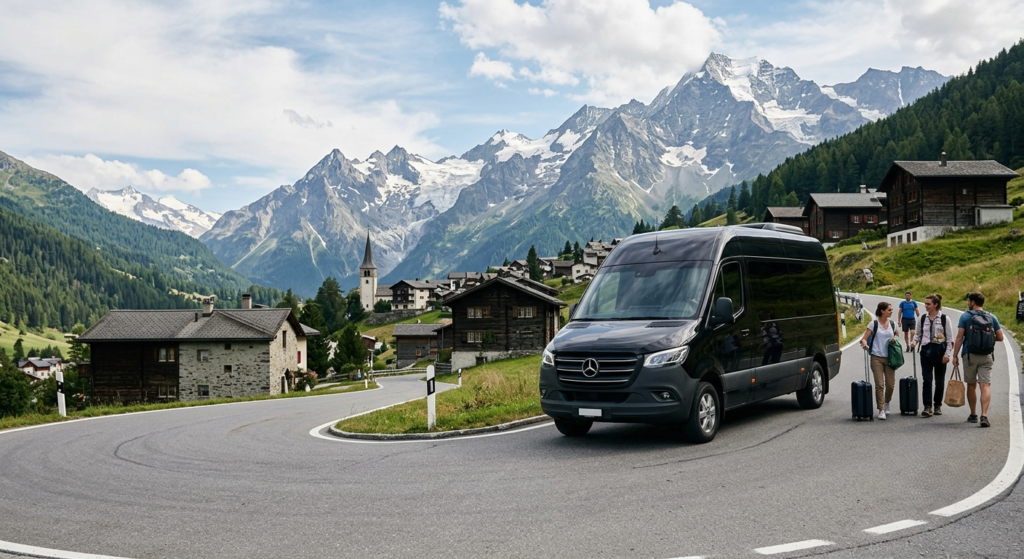
A private coach can be suitable for organised groups travelling together between airports, hotels, religious sites and cities. It can also support multi-day itineraries where the group needs coordinated ground transportation.
This option may be useful for:
- Parish and church groups.
- Organised religious tour groups.
- Multi-country pilgrimage programmes.
- Groups carrying luggage between hotels.
- Travellers who prefer to remain together during transfers.
Private Vans and Chauffeur Services
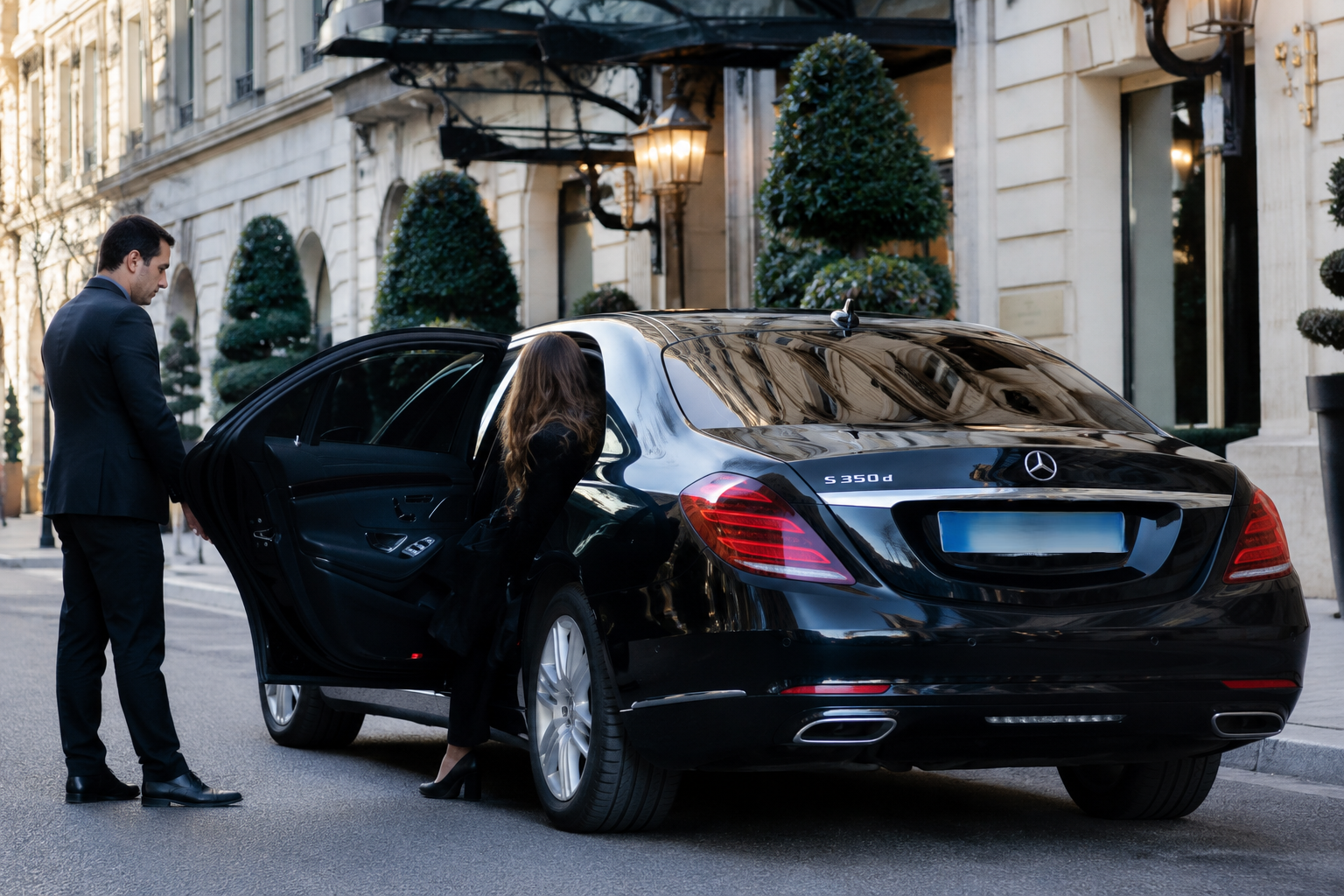
Smaller groups, families, clergy or private travellers may prefer a private vehicle or chauffeur service for specific transfers.
Depending on destination and availability, vehicle categories may include:
- Mercedes V-Class vehicles with configurations for up to 8 passengers.
- Mercedes Sprinter vehicles in 12-, 16- or 19-seat configurations.
- Larger coaches for bigger organised groups.
The correct vehicle must be confirmed against the actual passenger count, luggage volume, itinerary and local availability. Seating capacity alone does not guarantee sufficient luggage space.
Trains and Public Transportation
Rail services can be practical between some European cities. However, a group may need to coordinate station transfers, luggage handling, tickets, platform access and onward transport to hotels or religious sites.
For groups with older participants or travellers with mobility requirements, compare the complete door-to-door arrangements rather than only the train journey.
Important Planning Considerations for Religious Group Travel
A pilgrimage itinerary needs more than a list of destinations. Organisers should plan around the participants and the purpose of the visit.
1. Confirm the Religious Programme
Check the official sanctuary or cathedral information for Mass times, processions, special celebrations, group arrangements and any booking requirements. Schedules can change, so verify them close to the travel dates.
2. Consider Mobility and Walking Requirements
Some religious sites involve steps, slopes, cobbled streets or long walking distances. Ask participants about mobility requirements and check accessibility information with the relevant site before confirming the itinerary.
3. Allow Time for Prayer and Reflection
Do not schedule every hour with sightseeing. Participants may want time for private prayer, confession, religious services or group reflection.
4. Plan Accommodation Carefully
Consider the distance between the hotel, religious site, coach drop-off point and available restaurants. A centrally located hotel may reduce daily transfer requirements, but accessibility and budget also matter.
5. Check Travel Documents and Entry Requirements
Travellers should check passport validity, visa requirements, travel insurance and entry rules for every country included in the itinerary. Requirements depend on each traveller’s nationality and residence status.
6. Build in Flexibility
Allow contingency time for traffic, delayed arrivals, changes to religious programmes and participants who need additional assistance. Avoid making the itinerary dependent on a series of very tight connections.
What Travel Agents and Tour Operators Should Consider
For travel professionals organising a Europe pilgrimage tour, transportation is one part of a wider operational programme.
Before requesting a quotation, prepare:
- Travel dates: Include arrival and departure dates for the complete group.
- Passenger details: Confirm the number of adults, children and any special assistance requirements.
- Destination sequence: List every city, shrine, hotel and planned stop.
- Flight information: Provide arrival and departure airports, flight numbers and timings when available.
- Luggage requirements: Estimate the number and type of bags.
- Hotel details: Confirm addresses and any coach access restrictions.
- Religious programme: Identify fixed service times, group visits and other scheduled activities.
- Transportation scope: Clarify whether the group needs airport transfers, intercity transport, daily disposal, or a combination.
- Contingency arrangements: Consider what support is needed if a flight or scheduled activity changes.
Tour Passion is a European DMC and transportation provider supporting travel agents, tour operators and group organisers with relevant ground transportation requirements. Depending on the itinerary, services may include airport, hotel and cruise transfers, private chauffeur services, group transportation and private coach arrangements.
For a multi-country pilgrimage, share the complete itinerary rather than requesting individual transfers without context. This helps the transportation requirement be assessed against the group’s route, luggage and schedule.
Is a Europe Pilgrimage Tour Suitable for Senior Travellers?
Yes, a pilgrimage can be planned for senior travellers, but the itinerary should reflect their mobility, health-related needs and preferred pace. Organisers should not assume that all participants can manage the same walking distances or daily schedule.
Useful planning steps include:
- Choose accommodation with suitable access and convenient transport connections.
- Check steps, slopes and walking distances at religious sites.
- Avoid scheduling several demanding visits on the same day.
- Arrange appropriate drop-off and pickup points where permitted.
- Confirm any wheelchair or mobility assistance directly with the relevant site.
- Allow rest periods and flexible time between activities.
For groups with different mobility levels, consider whether optional activities or a slower alternative programme would help participants take part comfortably.
Planning Your European Pilgrimage with Tour Passion
A well-organised pilgrimage needs a practical balance between religious visits, travel time, accommodation and group coordination. Whether the programme focuses on Rome and Assisi, Lourdes, Fátima, Santiago de Compostela or several destinations across Europe, transportation should be planned around the group’s actual requirements.
Tour Passion supports travel agents, tour operators, DMCs and group organisers with European ground transportation, including private airport transfers, chauffeur services and group coach transportation. Vehicle selection and service availability are confirmed according to the destination, dates, group size, luggage and itinerary.
Share your travel dates, passenger numbers, destination list and required transportation services to discuss arrangements for your next European pilgrimage programme.
Plan Your Europe Pilgrimage Transportation with Tour Passion
Organising a pilgrimage across Europe? Tour Passion supports travel agents, tour operators, churches and group organisers with private airport transfers, chauffeur services and group transportation.
Share your travel dates, group size, destinations and itinerary to discuss suitable transportation arrangements for your pilgrimage programme.
Email: b2b@tourpassion.com
Phone: +33 1 82 83 60 24
Emergency WhatsApp: +33 7 66 26 26 04 51
FAQ
1. What are the best destinations for a Europe pilgrimage tour?
Popular Christian pilgrimage destinations include Rome and Vatican City, Assisi, Lourdes, Fátima and Santiago de Compostela. The best selection depends on the religious interests of the group, available travel days and preferred pace.
2. How many days are needed for a European pilgrimage?
There is no fixed duration. A single-destination pilgrimage may need only a few days, while a multi-country itinerary requires additional time for intercity travel, overnight stays and religious visits.
3. Can I visit Rome, Lourdes and Fátima on one pilgrimage?
Yes. These destinations can be combined in a multi-country itinerary, but the route should account for the distances between them, flight or ground connections, accommodation and time needed at each religious site.
4. Can I visit Santiago de Compostela without walking the Camino?
Yes. Travellers can visit Santiago de Compostela and its cathedral without completing a Camino walking route. The Compostela certificate has specific pilgrimage requirements, so visitors should check the official Pilgrim’s Office information if they intend to apply for one. Catedral de Santiago
5. Is private coach transportation suitable for pilgrimage groups?
Private coach transportation can be suitable for organised groups travelling between airports, hotels and religious destinations. The vehicle should be selected according to passenger numbers, luggage, mobility requirements, route and local availability.
6. Can a Europe pilgrimage itinerary be customised for senior travellers?
Yes. Organisers can plan a slower itinerary with suitable accommodation, manageable walking distances, rest periods and appropriate transportation. Accessibility should be checked with each religious site before booking.
7. What should a travel agent provide when requesting a pilgrimage transportation quotation?
Provide the travel dates, passenger numbers, destinations, full route, hotel addresses, airport and flight details, luggage requirements and any mobility considerations. Also specify whether the group needs airport transfers, intercity transportation, daily coach services or a combination.
8. Can Tour Passion assist with transportation for multi-country pilgrimage groups?
Tour Passion can discuss European ground transportation requirements for travel agents, tour operators and group organisers. Services may include airport transfers, hotel transfers, chauffeur services and private group transportation, subject to destination, dates and availability.
Suggested For You
Multi-Country Europe Tour Package – 11 Days
Switzerland France Tour Package – 12 Days
Luxury Transfer Services in Europe
Recommended Europe Travel Services
Paris coach hire,
Paris chauffeur service,
Schiphol airport transfers,
Amsterdam airport taxi,
Paris airport transfer,
Europe coach rental,
Barcelona airport transfers,
Barcelona transportation,
Luxury Europe travel,
Interlaken transfers,
Davos transfers,
Italy chauffeur services,
Paris car rentals,
Grand Paris taxi services,
Paris CDG taxi,
Eco taxi Paris,
Travel trade platform